
Sri Lanka (2023)
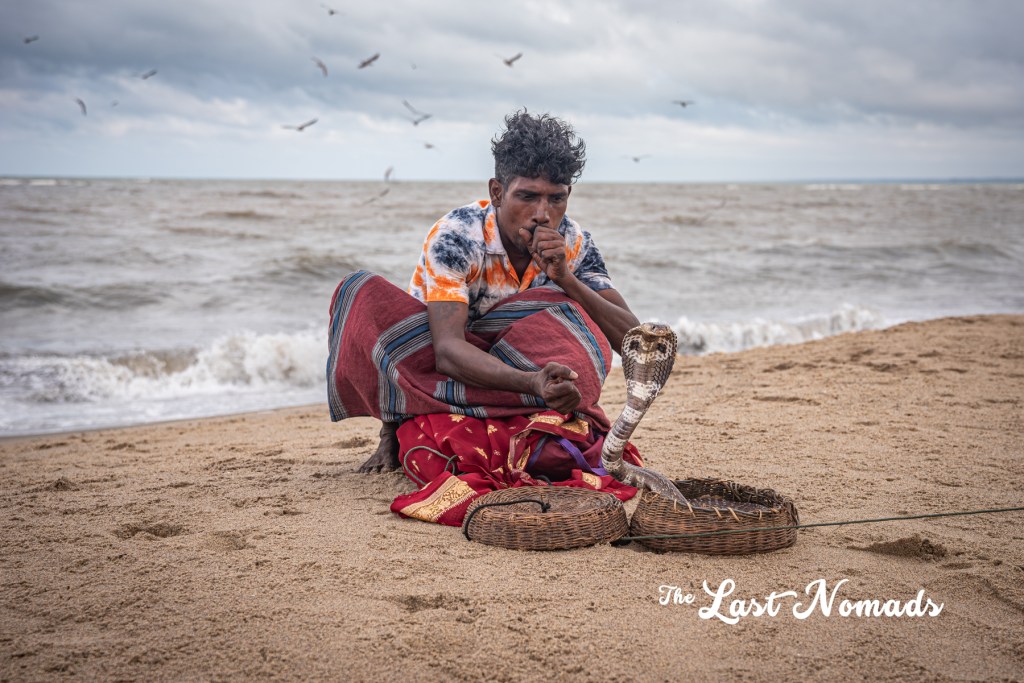
Negombo, Sri Lanka. At the fishermen’s beach, where the pervasive scent of dried fish fills the air and the morning sun filters through the fishermen’s nets as they shake out their modest catch, no one would expect a wayfarer with a cobra emerging out of the shadows. Born in 1990, Rajuge represents a lineage of Telugu snake charmers entrenched in a nomadic lifestyle, navigating the intricate balance between tradition and modernity. His enthralling performance captured not just my attention but that of the entire beach community. The mundane activities suddenly halted as Rajuge began luring his cobra out of her basket, casting a spell that mesmerized children, market sellers, and fishermen alike.
The origins of Telugu snake charmers trace back to a legacy steeped in mystique and wanderlust. Despite government efforts to settle them, these nomadic artisans are deeply rooted in their age-old traditions, resisting the confines of settled life. The allure of their vagabond existence stems not only from economic pursuits but also from a cultural identity deeply intertwined with their artistry. While other vocations offer stable incomes, the art of snake charming presents the possibility of earning up to 15,000 Sri Lankan rupees in a single day, a stark contrast to the daily wages of labor or farming.
Their nomadic lifestyle is a carefully orchestrated dance between seasons. During the off-season, when tourist spots lay dormant, the snake charmers and their palm-reading wives traverse villages, announcing their arrival with the rhythmic beats of traditional drums. This period sees them focusing on entertaining locals, lending their mystique to village gatherings. However, as tourist seasons bloom, promising higher earnings, these artisans gravitate towards such spots, capitalizing on the allure of their performances for a wider audience.
Central to their nomadic lifestyle is the banding together of members of the clan. Movement occurs within these familial bands, ensuring mutual support, communal ties, and the preservation of their cultural heritage. A poignant aspect is the role of makeshift camps during travel. While parents journey in search of opportunities, children remain in the village, cared for by the community, a testament to their deep-rooted sense of community and solidarity.
The Sri Lankan government with support of Christian organisations, recognizing the marginalized status of these artisans, initiated projects aimed at improving their living conditions. The establishment of 5 settlements across the country, referred to as «colonies», equipped with permanent houses constructed by the state, marked a significant effort towards uplifting their community. However, the dichotomy persists as the snake charmers, deeply rooted in their cultural practices, oscillate between settling in these colonies and embracing their nomadic heritage.
At the heart of this narrative lies a complex interplay between tradition, economic sustenance, and cultural identity. For Rajuge Kumar, the charm of the cobra’s dance is more than entertainment; it is a living embodiment of their identity, a tale woven through generations.
 The Last Nomads